
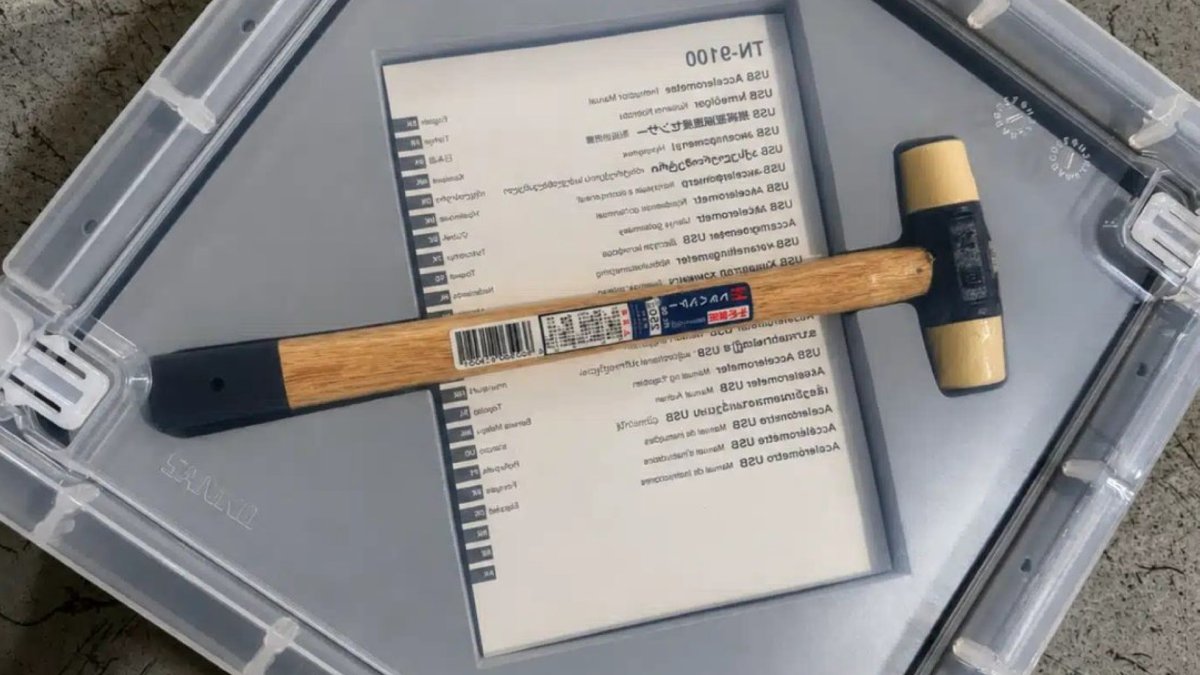
Toyota is using a plastic hammer to diagnose a potentially serious engine defect in over 250,000 trucks and SUVs under recall. The tool measures vibrations in the crankshaft, allowing technicians to assess a critical bearing without dismantling the engine.
The hammer test, explained
The procedure involves attaching an accelerometer to the crank bolt and striking the pulley with the hammer at a specific angle. The impact creates vibrations that indicate whether the #1 main bearing has worn abnormally. A company representative said the method works like a tuning fork, producing predictable results when struck correctly.
Technicians must apply consistent force. The hammer provides feedback if the swing is too light or too hard, ensuring the software records a usable reading.
The automaker developed the test after discovering manufacturing debris was damaging the bearing in some V6 engines. Production changes were made to prevent contamination, but many vehicles already on the road may have suffered damage. The recall has drawn criticism for its inconsistent approach—Toyota insists not every affected truck requires a new engine, leaving owners unsure about their vehicles’ safety.
How the defect leads to engine failure
The #1 main bearing holds the crankshaft, which turns piston motion into rotational power. Uneven wear causes the crankshaft to wobble, leading to metal-on-metal contact, increased friction, and eventual breakdown. The solution aims to detect early vibration changes before symptoms like knocking or rough idling appear.
For trucks already showing problems, Toyota tells owners to visit a dealer immediately. The hammer test isn’t meant for vehicles with active engine issues, where replacement is the only solution. It serves as a preventive check to identify at-risk engines before failure occurs.
Related: Lamborghini V12 Powers Historic Racing Boats
Manufacturing tolerances contribute to the problem. While parts are built to identical specifications, small machining differences can affect performance. In this case, leftover debris from production sped up wear in some engines, creating a hidden risk that surfaces only after extensive use.
The recall has progressed slowly, with Toyota prioritizing vehicles based on age, mileage, and reported symptoms. The hammer test was introduced to speed up the process, offering dealers a quicker way to decide which engines need replacement. However, the method isn’t perfect—Toyota admits it provides a “reasonable” but not definitive assessment of an engine’s condition.
Owners have expressed frustration over the recall’s uneven rollout. Some received notices months apart, while others still await updates. The test may reduce uncertainty, but it also shows how hard it is to predict engine failures.
A company representative noted the inspection software combines vibration data with the vehicle’s service history. If the software can’t confirm the bearing is free from abnormal wear, the dealer will install a new engine.
While unusual for a modern automaker, the approach isn’t new. Mechanics have long used taps to diagnose loose or worn parts. Toyota’s method refines that practice with precise measurements, turning a simple tool into a modern diagnostic aid.
The recall applies to certain Toyota and Lexus trucks and SUVs with the twin-turbo 3.5-liter V6 engine. Owners should check their vehicle identification number on Toyota’s recall site to confirm eligibility.


