
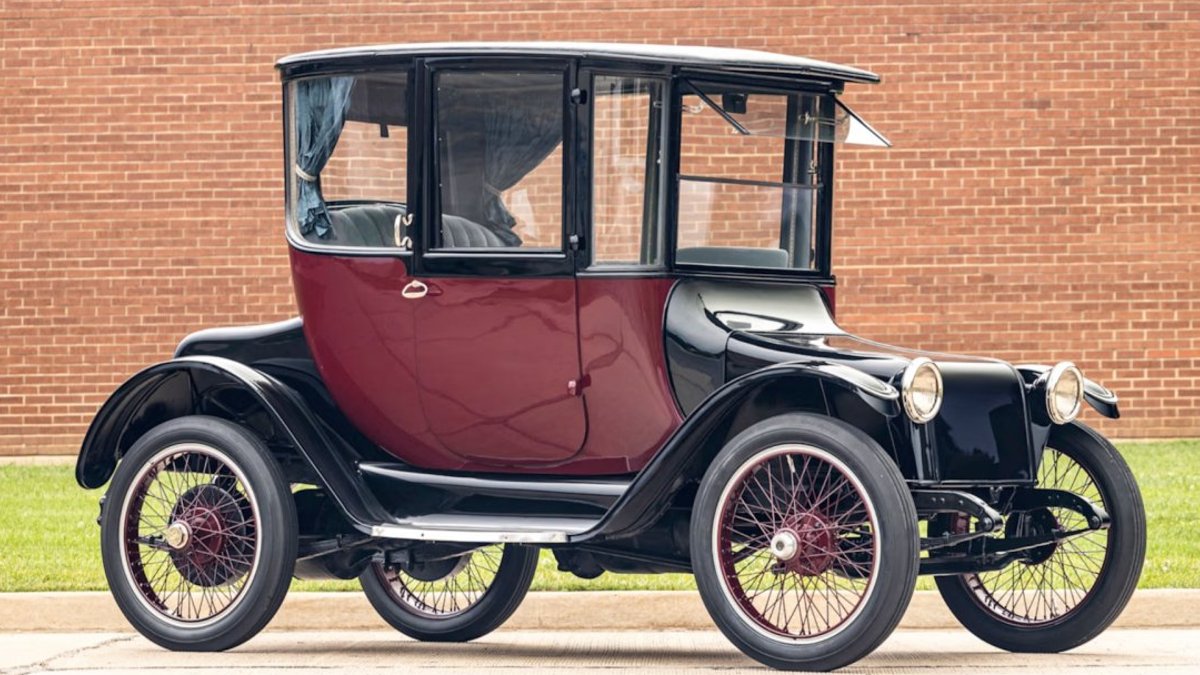
The 1918 Detroit Electric Model 75B Brougham coupe set to cross the block at Mecum’s 2026 Monterey Car Week auction isn’t just a museum piece. It runs on modern batteries.
One of the few surviving examples of the early electric brand, the car underwent a full restoration that included replacing its century-old power source. The listing describes the work as done to “concours standards,” though judges may question how to score a vehicle with non-original drivetrain components.
How a 106-year-old electric car got a second charge
The original Detroit Electric batteries would have degraded beyond use by now. Rebuilding internal combustion engines is simpler than reviving 1910s battery technology. The solution involved retrofitting the car with contemporary cells, likely sourced from scrapped hybrids or EVs, or through firms specializing in vintage electric conversions.
The listing doesn’t specify which batteries were used, but the approach isn’t unusual. Jay Leno’s 1914 Detroit Electric, for instance, is being repowered with Nissan Leaf modules. What remains unclear is how the update affects performance. The original Model 75B had a range of about 80 miles and a top speed of 20 mph—figures that might improve with modern chemistry, though the auction listing doesn’t confirm this.
Detroit Electric’s origins trace back further than its name suggests. The company started in 1884 as the Anderson Carriage Company, shifting to automobiles in 1907 as the industry moved away from horse-drawn transport. Before gas stations became common, electric cars had an advantage: no need to search for fuel. Gasoline cars required hand cranks, manual lubrication, and tolerance for fumes, making them less appealing to new drivers.
Electric vehicles were marketed as cleaner, quieter, and simpler. They also aligned with gender norms of the time. Without a crank starter or gears to manage, EVs were positioned as ideal for women, who were expected to value ease over power. The Model 75B’s design reflected this. Its tiller steering and forward-facing driver’s seat made the cabin feel like a parlor, complete with built-in flower vases—a feature Volkswagen later echoed with the New Beetle in the 1990s.
Related: Lucid Gravity GT‑S Unveiled as 1,070‑HP Sapphire SUV
Why Detroit Electric faded—and why collectors now seek its cars
For a time, electric cars were strong competitors. Brands like Milburn and Baker rivaled Detroit Electric, but the rise of Ford and General Motors, with their focus on internal combustion, altered the market. By 1939, the company had closed. A 2013 effort to revive the name with a Lotus Elise-based EV failed, leaving the original models as rare collectibles.
This Model 75B stands out not just for its age or brand. It’s functional. Most surviving Detroit Electrics are static displays, their original batteries long dead. This one, though modified, can still move under its own power—a direct connection between the automobile’s earliest days and today’s electric shift.
The auction doesn’t list a reserve price, but the car’s rarity and running condition suggest it won’t sell cheaply. Whether it ends up in a private collection or a museum, it highlights that electric cars aren’t a new concept. Only the technology has changed.
Restoring a century-old EV with modern batteries may seem unusual, but it raises a practical point. If this can be done with a 1918 Detroit Electric, similar updates could apply to other vintage models. The decision depends on cost, effort, and whether the result is more valuable as a driver or a time capsule. For now, this car manages to be both.
Its auction debut marks a rare chance to own a piece of automotive history that still runs.


