
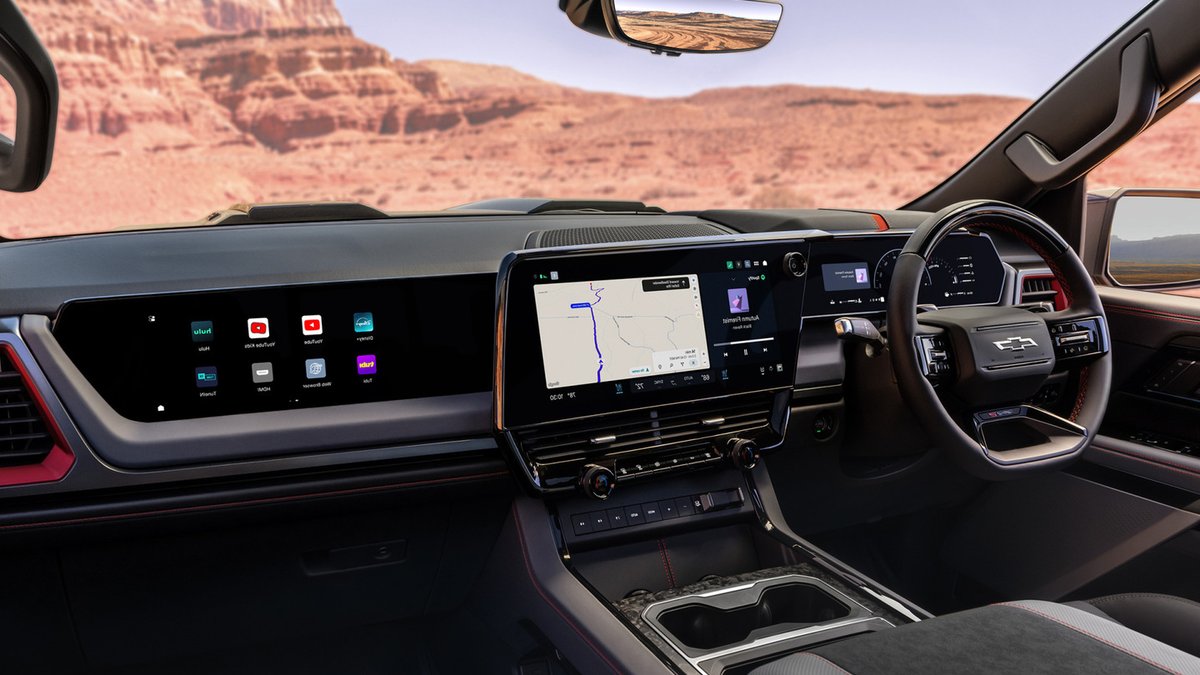
General Motors announced Tuesday it will reinstate Apple CarPlay and Android Auto in its upcoming infotainment platform, reversing a 2023 plan to eliminate the services from all new vehicles.
New system slated for 2027 pickups
The updated interface will first appear in the 2027 Chevy Silverado and 2027 GMC Sierra trucks. General Motors highlighted features such as a high-contrast display, a redesigned home screen, and a 3-D traffic view compatible with Super Cruise.
According to the company’s blog post, this software will later be introduced across the broader GM lineup, with the pickups serving as the initial high-volume rollout.
Consumer demand drives the shift
An American Trucks study revealed that 55% of Apple CarPlay users would avoid purchasing a new vehicle without it, while 36% of Android Auto users shared the same sentiment. Among GM owners, 42% stated they would not buy a vehicle if either service was unavailable.
Following GM’s earlier removal of these services, third-party kits emerged to restore functionality, highlighting strong market demand.
The integration will not replace GM’s native system. Instead, phones will be mirrored in a smaller card on the screen, leaving space for vehicle-specific data such as trip information, trailer status, and a persistent climate bar.
“People really like CarPlay and Android Auto because they’re so user-centric,” said GM software chief Mike Wahlstrom. “We heard from customers that they want that same simplicity while still having quick access to everything their vehicle can do…”
For drivers, this change offers a familiar smartphone experience without compromising access to essential vehicle functions. It also simplifies the transition for owners switching between different GM models, as the core layout remains consistent.
Built-in Google apps will remain accessible outside the mirroring feature, allowing Google Maps to function without a phone connection and enabling apps like Disney+ on the passenger screen.
The platform supports over-the-air updates, enabling GM to deliver security patches and new features without requiring a dealer visit. However, critics point out that this capability could also allow the automaker to disable the services remotely in the future.
General Motors’ decision reflects a clear response to buyer preferences, reinstating the two leading smartphone integration options while preserving its own infotainment ecosystem.


