
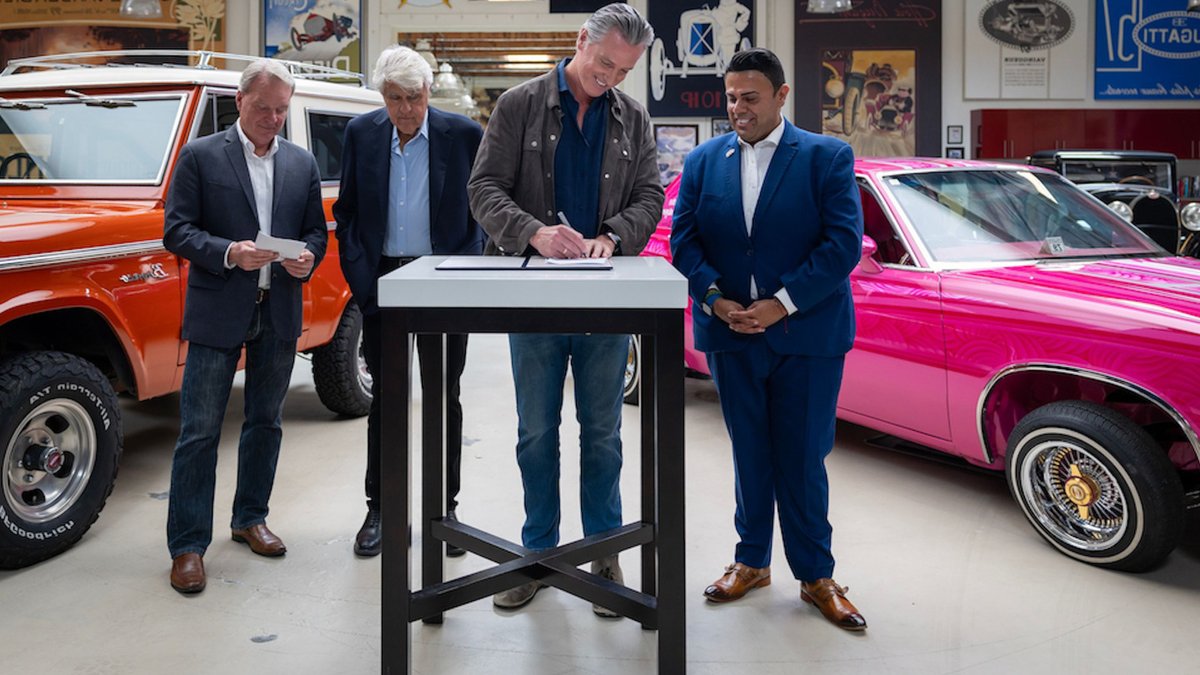
California Governor Gavin Newsom signed three pieces of legislation today that reshape the state’s approach to automotive heritage and emissions. SB 1392, known as Jay Leno’s Law, and AB 2541 target specific niches of California’s car culture, while SB 1069 offers a pathway for aftermarket parts to reach consumers faster. The trio of bills aims to balance the preservation of classic vehicles and lowrider traditions with the state’s strict environmental standards.
Leno’s Law Adjusts Smog Rules for 1970s Collectors
The first bill, SB 1392, modifies the original proposal that failed committee review in August 2025. It now applies only to vehicles from model years 1976 through 1985 that are insured as collector cars and driven fewer than 1,000 miles per year. This narrower scope aims to protect a “treasured part of California’s culture” without derailing the state’s push toward clean transportation.
California has long required biennial smog checks for most vehicles, though cars from 1975 or earlier are exempt. The governor’s office emphasized that limiting the exemption to a small class of vehicles allows the state to maintain its status as a cultural epicenter for classic car heritage while keeping its environmental goals on track.
Lowrider License Plates Fund Cultural Arts
AB 2541 establishes a specialized license plate design that reflects lowrider culture and heritage. The bill, authored by Assemblymember Mark González, directs the Department of Motor Vehicles to consult with the Arts Council on the design. Once the DMV receives at least 7,500 paid applications by January 1, 2032, the Lowrider License Plate Program will launch.
Revenue from the specialty plates will flow into the Lowrider Arts and Culture Fund. This fund will support lowrider arts and cultural preservation efforts throughout the state. The legislation builds on previous state actions, including AB 436, which legalized cruising in 2023.
Read Also: GM restores CarPlay Android Auto for 2027 trucks
California’s strict emissions regulations, enforced by the California Air Resources Board (CARB), have made it difficult to keep non-smog-exempt classic cars road-legal. The state is home to the first modern freeway in the U.S. and one of the most iconic coastal road stretches in the world, yet it also hosts some of the strictest emissions rules in the country. This tension between preserving automotive history and maintaining clean air has driven much of the recent legislative activity.
SEMA Bill Eases Path for Aftermarket Parts
Before this bill, manufacturers needed a California Air Resources Board (CARB) Executive Order to sell or advertise these products. SB 1069 allows qualifying products to be sold under the SEMA Certified Emissions Program while CARB completes its final review.
Lowrider Culture Faces a Long History of Legal Obstacles
Lowriders in California have confronted a difficult path over the last several decades. While the state has recently taken steps to normalize this specific style of vehicle modification, the legal climate for lowered cars has been harsh. Cruising, a staple of lowrider gatherings, was outlawed in many cities during the early 1980s. State and local officials frequently targeted these events, often using aggressive policing tactics. This crackdown was not limited to vehicle height restrictions.
Officials have identified that these specific enforcement actions disproportionately affected the Latino community. By criminalizing cruising and lowering vehicles, the state attempted to suppress a cultural movement that represents identity and community pride for many families. The legislation signed today marks a shift in that dynamic. The Lowrider License Plate Bill provides a direct mechanism to support the arts and culture that define this tradition. Assemblymember Mark González emphasized that the new law recognizes Chicano history as part of California’s broader history.
Aftermarket Industry Seeks Faster Approval for Parts
Manufacturers of emissions-related automotive parts have faced significant hurdles in California. Prior to the passage of SB 1069, any product requiring emissions certification needed a California Air Resources Board Executive Order before it could be sold, advertised, or installed. This requirement created a lengthy approval process that delayed product availability.


