
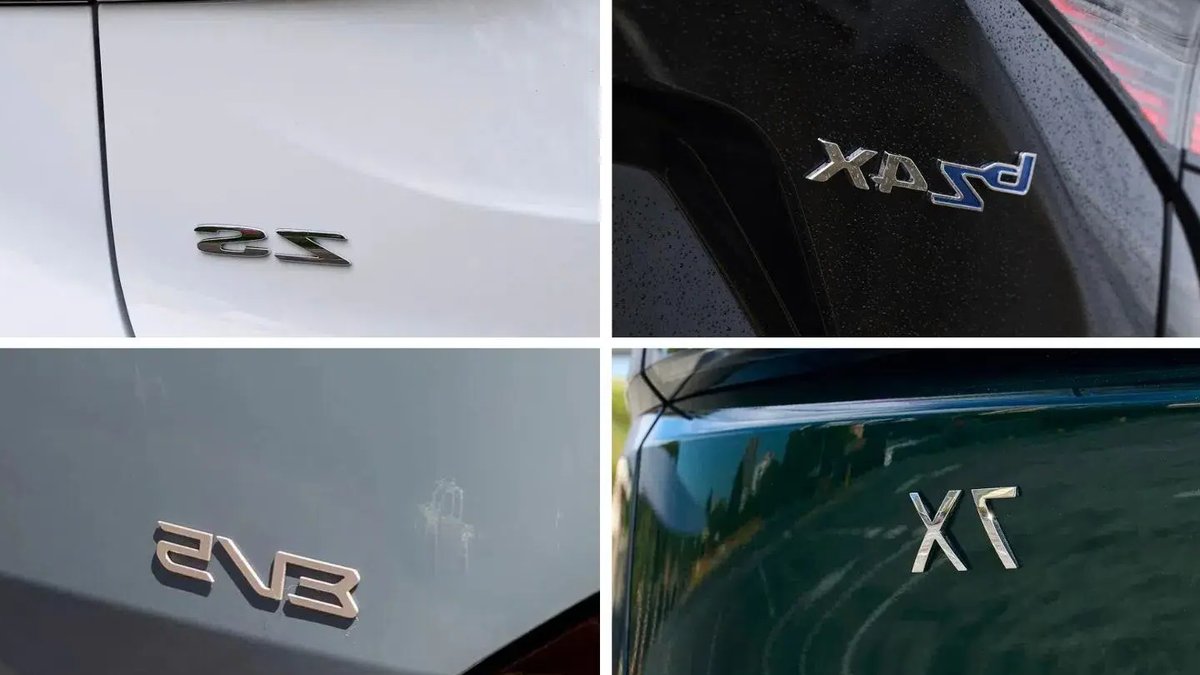
A car buyer in Australia today faces a different challenge than they did in the 1990s. Back then, most models carried simple, recognizable names—Commodore, Falcon, Magna, Pulsar—that instantly signaled brand, size, and even era. By contrast, nearly half of all new cars sold in August 2026 bore alphanumeric labels like BYD Atto 3 or GWM Haval H6, according to an analysis of Federal Chamber of Automotive Industries (FCAI) VFACTS data. This change reflects broader industry trends, including trademark constraints, the rise of electric vehicles, and Chinese manufacturers introducing models that often defy easy pronunciation.
The move away from traditional names did not happen suddenly. Early automakers such as Ford and Mercedes-Benz used numeric labels (Model A, Model 300) to denote engine power or production order. By the 1960s, Australian brands like Holden adopted a hybrid system, letters for decades, numbers for model years, while German automakers relied heavily on alphanumeric codes. Even Toyota, now associated with names like Corolla and RAV4, began with models like the Corona and Crown in the 1950s and 1960s before shifting to more abstract labels.
The 1990s marked the peak of memorable names. Mirage, Apollo, Celica, and Vitara were instantly recognizable, even for casual buyers. However, by 2015, alphanumeric models accounted for 40% of the Australian market, rising to 47% by 2025, a reversal from the 60% share of traditional names a decade earlier. This trend accelerated with the arrival of Chinese brands, which frequently use numeric suffixes (Atto 1, Haval H7) to distinguish models, and electric vehicle makers like Kia (EV6, EV9) and Hyundai (Ioniq 5, Ioniq 6), treating numbering as a branding strategy rather than a naming convention.
One reason for this shift is practical: there are only so many unique letter combinations before trademark conflicts arise. For example, BYD has Atto 1, Atto 2, and Atto 3, a system that scales easily but risks confusion. Even Toyota, which still uses RAV4 and Land Cruiser, has adopted bZ4X for its electric SUV, a name that sounds more technical than automotive.
The issue extends beyond difficulty in recalling names like MG ZST or GWM Wuling Hongguang Mini EV. A 2023 study by Monash University’s transport economics team found that 32% of first-time car buyers in Australia struggled to correctly identify alphanumeric models in a blind test, compared to just 8% for traditionally named cars. The problem affects more than just new buyers; even dealership staff occasionally mispronounce or misremember models, leading to sales errors.
There is no evidence that alphanumeric names hurt sales, BYD’s Atto 3 became Australia’s best-selling SUV in 2025 despite its unpronounceable label, but they do create challenges. A 2024 survey by Roy Morgan Research found that 58% of Australian drivers preferred traditionally named cars, citing ease of discussion and recognition. Yet the trend shows no signs of slowing. With 53% of new cars in August 2026 carrying alphanumeric labels, the alphabet soup is here to stay.


