
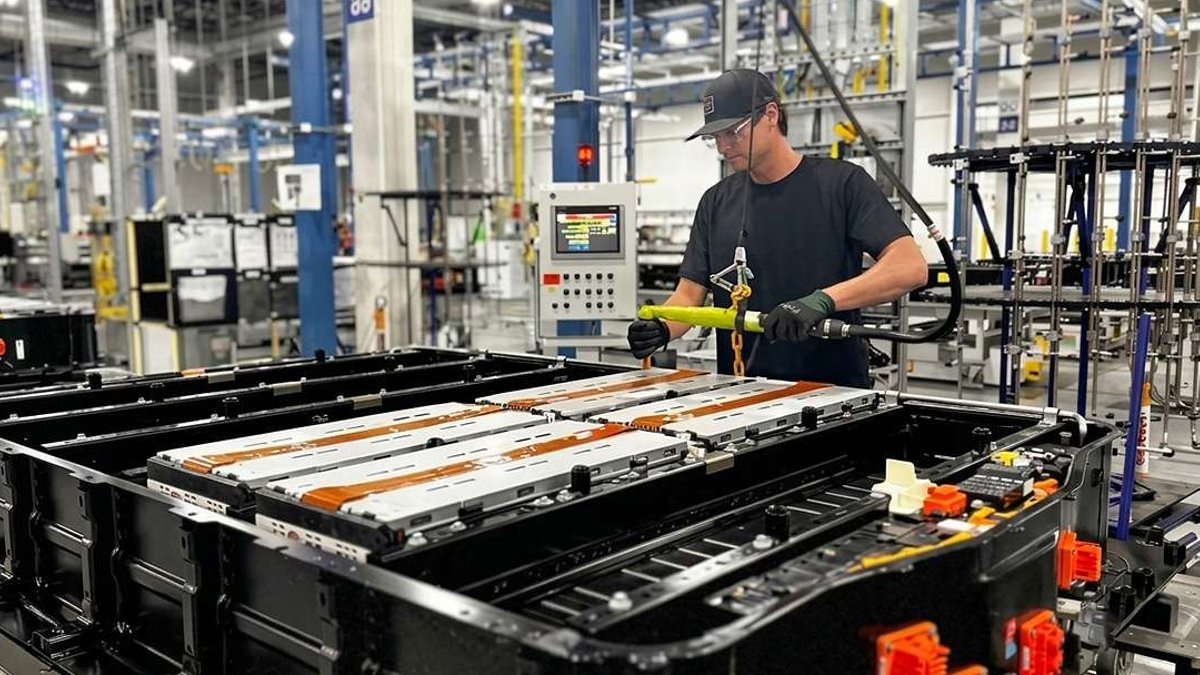
General Motors has produced the first Chevy Silverado EV Trail Boss and GMC Sierra EV AT4 trucks using battery cells made entirely from recycled nickel, cobalt, and manganese. The initiative represents progress toward cutting dependence on newly extracted minerals, though its real-world effects for truck owners depend on specifics that remain unclear.
Melissa Flaherty, GM’s director of sustainable EV battery ecosystems, confirmed in a post that the recycled materials originated from 80 end-of-life EV battery packs. Cirba Solutions processed these into black mass, yielding over 12 metric tons of cathode active material. GM then verified the material met the same quality and safety standards as new cells before integrating it into modules at Factory ZERO and Spring Hill Assembly.
Internal testing by GM demonstrated that recycled cells matched the performance of those made from virgin materials. However, these results have not been validated by independent sources. No third-party assessments of range, towing capacity, or charging behavior for these battery packs have been released.
The recycled cells now power the Silverado EV Trail Boss, Sierra EV AT4, and several Cadillac models, including the LYRIQ, LYRIQ V, VISTIQ, ESCALADE IQ, and ESCALADE IQL. These are the first production vehicles to use the new cells, and they are already being delivered to customers. GM has not disclosed how many trucks incorporate recycled batteries or how buyers can confirm whether their vehicle includes them.
For truck owners who frequently tow heavy loads or depend on their vehicles daily, this ambiguity could be significant. If a battery fails, knowing its composition might influence decisions about repairs or the purchase of a used model with a recycled pack.
Read Also: Toyota’s 2026 C-HR: Powerful EV with Sensitive Alarms
Cost considerations also play a role. The company acknowledges that raw materials represent a major expense in battery production, and recovering them could eventually reduce costs. However, GM has not pledged to pass any savings directly to consumers or provided specific cost reductions for the Silverado EV or Sierra EV.
Owners may also wonder about maintenance and repairs. GM’s remanufacturing and refurbishment programs reuse over 70% of battery pack components, which could lower replacement costs if a pack fails. Additionally, used EV batteries can be repurposed for stationary energy storage before recycling—GM is collaborating with Redwood Materials to deploy around 10,000 second-life batteries in energy infrastructure projects.
The recycled content in these batteries does not cover all components. The 100% recycled claim applies only to nickel, cobalt, and manganese in the cathode, excluding lithium and other cell materials. GM also noted that the recycled supply comes exclusively from its own retired packs, not external sources.
While industry recycling processes can recover up to 95% of nickel and cobalt and 80% of lithium, these figures represent theoretical potential, not confirmed outcomes from this pilot. Real-world durability, how these packs endure years of heavy use, extreme temperatures, or fast charging, has yet to be proven. A pilot program cannot address these concerns yet.


