
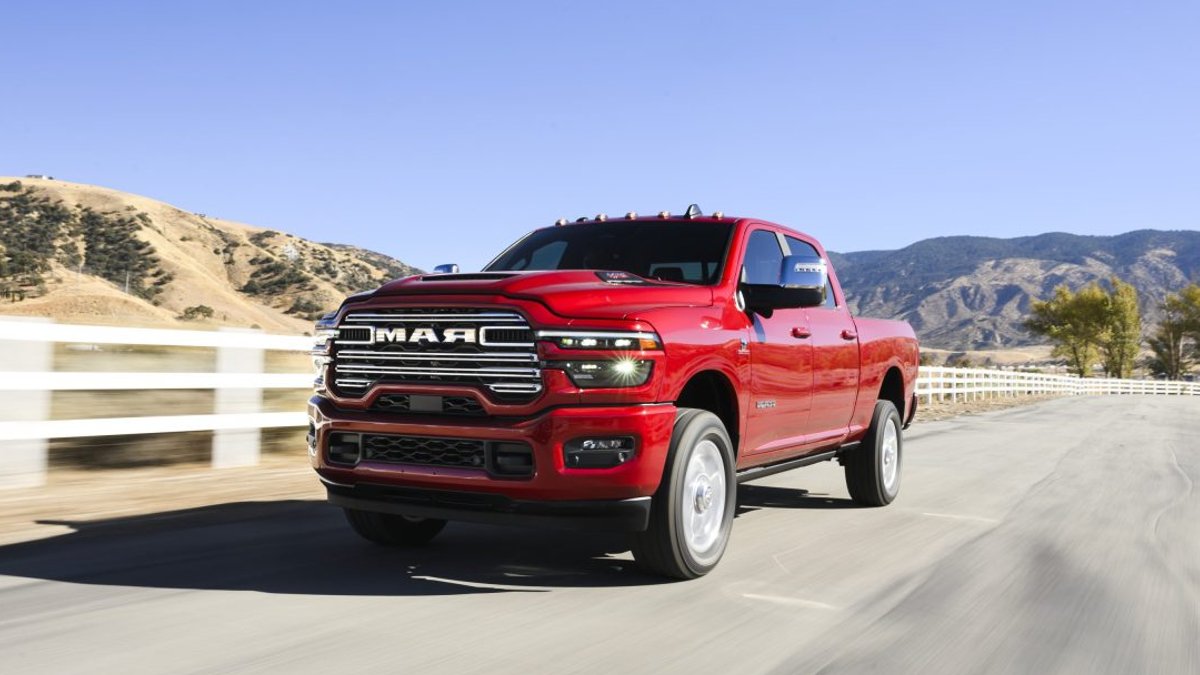
Heavy-duty pickups are statistically the most lethal vehicles on American roads for other drivers, according to new data released by the Insurance Institute for Highway Safety. The organization published a “other-driver death rate” study covering 2023 model-year vehicles, and the results highlight a stark disparity in vehicle size. Passenger cars are trending bigger and heavier, with electrified models pushing curb weights up even further. As automakers prioritize efficiency, the weight of electric powertrains is changing the safety calculus. The study calculated fatalities per million registered vehicle years to provide a clear picture of risk. This metric excludes the drivers of the vehicles being analyzed, focusing exclusively on occupants of other cars. Safety officials say this specific focus is extremely important for understanding the true collision risks facing the general public on the road.
Who tops the list?
Unsurprisingly, heavy-duty trucks and muscle cars dominate the top of this list. The Ram 3500 Crew Cab Long Bed takes the top spot with a calculated other-driver death rate of 204 deaths per million registered years. That figure is significantly higher than the second-place finisher, the Dodge Charger, which sits at 161 deaths per million registered years. The V8 model of the Charger claims the higher number among its variants. The Chevy Silverado 3500 Crew Cab follows at 126, while two Ram 1500s claim 124 and 113 points, and the Ram 2500 sits at 113. The first SUV does not appear in the list until the No. 10 spot, and it is the Cadillac XT5 (100). Surprisingly, the Ford pickup—the F-150 SuperCrew—does not appear until No. 12.
Physics dictates that heavier vehicles deliver significantly more force to smaller cars during a collision. This creates a hidden danger for the general public that isn’t always apparent when looking at standard safety ratings.
Related: Flock CEO says cameras don’t breach constitution
A full picture of danger
The list of worst cars to be inside during a crash features the usual suspects and some surprising entries. The Kia Rio and Nissan Versa are subcompact vehicles that offer minimal protection, contributing to their high death rates. Drivers of these cars face the highest risk of fatality during a collision with larger vehicles. Those were followed by the Chrysler 300 (132), rather surprisingly, and then the Dodge Charger (127) and Challenger (125). This gives the Charger the unenviable distinction of being a vehicle that is both statistically more dangerous to be inside in the event of a crash, as well as increasing the chances of another driver dying whenever one is involved.
When we flip to the vehicles with the lowest rates of other-driver deaths, IIHS notes that the results do not necessarily correlate in terms of size. However, there is a clear bias toward luxury makes such as BMW, Volvo, Mercedes, and Porsche. Officials argue that these cars likely have the best slate of active safety features. Viewers can inspect the full results on the IIHS website.


