
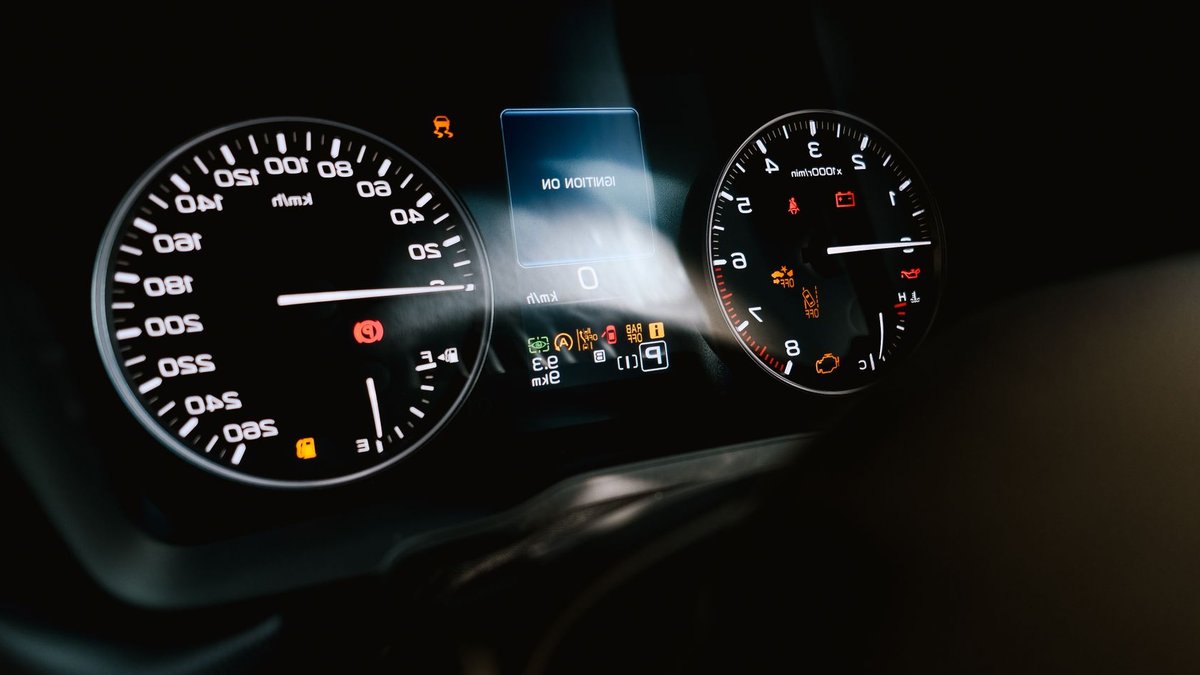
Drivers often ignore warning lights until they become a problem. A recent survey by MoneySuperMarket found that nearly a third of drivers have left a dashboard warning illuminated for more than a few days. Of these, over one in three have dismissed an engine check light, while nearly 29 percent continued driving after a tyre pressure alert appeared. Another study by Warrantywise showed that 46 percent of motorists could not identify even half of the symbols on their dashboard. Extrapolated to the entire UK, this means 23 million drivers are missing critical safety information. Three percent of drivers, or 1.5 million people, could not identify any warning light at all.
What the colors mean
Warning lights fall into three main categories based on their color. Red indicates a serious problem, such as a battery or oil issue. Orange or yellow lights are usually advisory, while blue or green lights cover information like indicators and fog lights. Drivers should address red or amber warnings quickly, as many can result in an MOT test failure if left on.
A red square light with a positive and negative terminal symbol usually points to a battery charging issue. This could stem from a failing battery, a broken alternator, or a loose alternator belt. If the battery is not charging, the car may fail to start without jump leads or a bump-start. A similar red light shaped like an oil can signals low oil pressure. Drivers should stop the engine immediately, check the oil level with the dipstick, and seek assistance if the light does not turn off.
Drivers should also watch for a red light shaped like a person with a circle in front of them, which indicates an airbag fault. A brake warning light may trigger simply because the handbrake is left on. If the light remains on after disengaging the brake, the driver should check the brake fluid level. A light showing a thermometer with wavy lines warns of overheating. In this case, the engine must be turned off to cool down to avoid serious damage.
Understanding these symbols is critical for safety, yet many drivers remain confused. A common oversight involves the oil pressure warning. This light appears when the engine’s lubrication system drops below the required pressure. Without sufficient oil, metal parts inside the engine grind against each other at high speeds, leading to rapid wear and catastrophic failure.
Related Post: Chevy Silverado EV Driver Cuts Fuel Costs by 75%
Less urgent alerts
A light shaped like a person with a seat belt across their chest warns that someone in the car is not wearing a seat belt. If you do not wear one and have no valid reason, you could face a £100 fine. The driver is responsible for any children aged 14 or younger not wearing theirs.
The low fuel warning light comes on when the tank has roughly 10 to 15 percent of fuel left. This usually means there are 30 to 50 miles remaining before the car stops. Drivers should not wait until the engine stutters to refuel.
Other common warnings
The ABS light appears during hard braking when the anti-lock braking system activates. During rapid deceleration, the system modulates brakes to prevent wheel lock-up and skidding. Try driving more slowly and smoothly to prevent the light from returning.
Warning lights are there to alert you if your car’s mechanical or electronic systems are not functioning properly. As such, understanding them could potentially prevent an accident. Generally speaking, whether it’s a single light, or your car dashboard is lit up, you should address the issue quickly. This guide provides an overview of dashboard warning lights and what they mean. For more detail, please consult your car’s handbook.


