
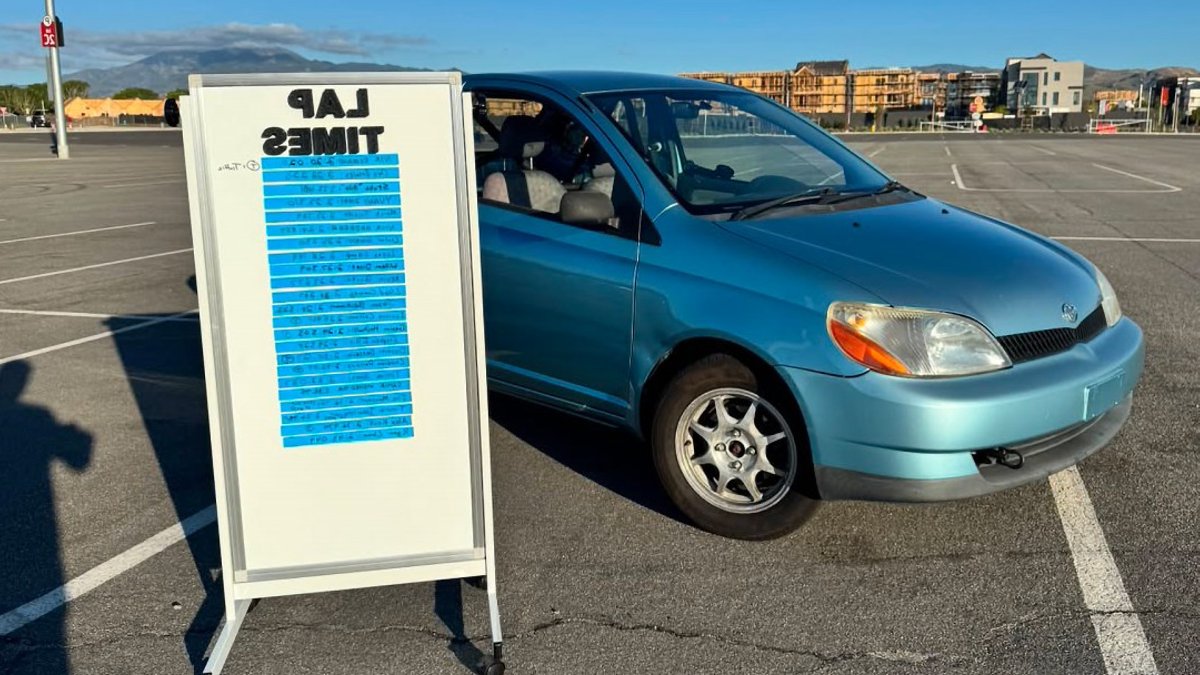
The Toyota Echo, a compact hatchback sold in the United States from 1999 to 2005, has resurfaced as the centerpiece of an unlikely track‑day experiment in California, drawing attention from drivers accustomed to high‑performance machines.
From Economy Car to Track Testbed
Originally priced under $10,000, the Echo featured a modest 108‑horsepower 1.5‑liter four‑cylinder engine and narrow tires, characteristics that kept it out of most racing conversations. Professional driving coach Abdullah Ibrahim, who has worked with brands such as McLaren and Porsche, saw potential in the vehicle’s simplicity. He runs the independent service Ace Racer and launched the “Echo Challenge” to demonstrate that motorsport enjoyment need not depend on expensive, exotic cars.
“I was almost indoctrinated into thinking the only way to enjoy motorsports fully is to be in a flagship car like a McLaren 720S or a 911 GT3,” Ibrahim said in a recent interview. “That belief stuck with me since I first saw a Lamborghini Gallardo Superleggera at a school book fair.”
Related: Mopar Supercharger Packages Return to Ram Rumble Bee
After achieving his own dream of driving supercars, he noted a lingering sense of dissatisfaction. He explained that the financial barrier to racing often forces drivers to “fake it till you make it,” seeking pro‑am opportunities with limited resources. The Echo, with its low purchase price and inexpensive maintenance, offered a counterpoint to that model.
Building a Track‑Ready Echo
When Ibrahim found a silver‑blue Echo on a Northern California farm, he bought it for a price comparable to the market value of newer compact cars. He stripped the interior of rodent damage and repaired a damaged wiring harness.
The project draws curious onlookers.
In a broader sense, this experiment mirrors earlier grassroots efforts that used inexpensive cars to teach fundamental driving skills. The concept recalls the “Star in a Reasonably Priced Car” segment on Top Gear, which famously featured the Suzuki Liana—a vehicle similarly modest in performance but valuable as a teaching platform.
Related: Ford EV Truck to Feature Apple Maps
What Drivers Are Learning
Participants say the Echo forces them to focus on momentum, braking precision, and efficient use of the track. “The car teaches you a lot of discipline, about energy conservation, how to be very efficient with your inputs, how to be very precise,” he noted. Because the vehicle lacks brute power, drivers must extract every ounce of speed through technique rather than horsepower.
Results have been mixed, with some less‑experienced racers posting faster laps than seasoned veterans. This outcome shows the car’s capacity to level the playing field: skill, rather than sheer engine output, becomes the decisive factor.
Looking ahead, Ibrahim continues to promote the challenge through his Instagram account @agi_racing and encourages interested drivers to join future sessions. He also welcomes outreach from professional racers, including those with Formula 1 experience, who might be curious about the project’s unique demands.


