
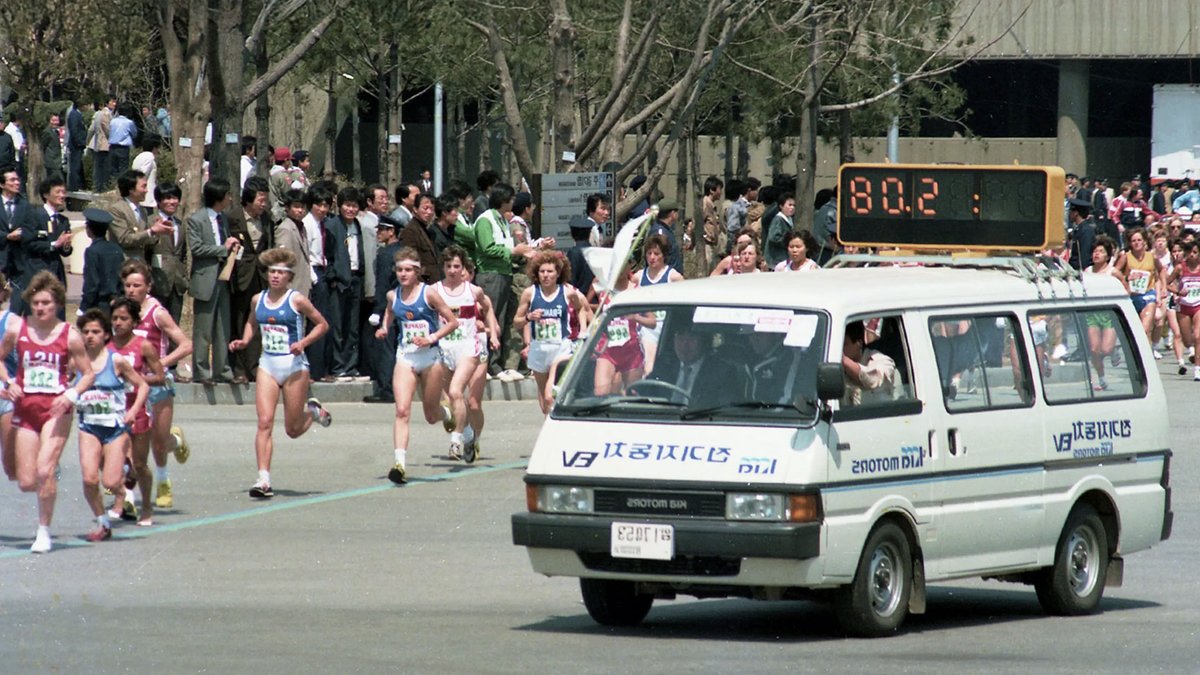
Kia’s entry into electric vehicle manufacturing traces back to a single experimental model: the battery-powered van created for the 1986 Asian Games. The Kia Besta EV was engineered to escort marathon runners without producing exhaust, representing the automaker’s initial experiment with electric propulsion.
This prototype replaced the diesel-fueled Besta, a rear-wheel-drive van that sold 20,000 examples in its first year, then 30,000 the following year. By removing the internal combustion engine, Kia engineers fitted a 35kWh battery pack and an electric motor, enabling the vehicle to cover 26 miles per charge—sufficient to complete a marathon route. The design also had to accommodate timing and broadcasting equipment while matching the pace of elite athletes.
After its successful debut at the Asian Games, the Besta EV was deployed again at the 1988 Seoul Olympics, demonstrating that battery-powered vehicles could handle practical, high-demand scenarios. Though never produced in mass quantities, the project demonstrated Kia’s early commitment to electric mobility and influenced later development efforts.
Fast-forward to the present, and the company recorded its 100,000th EV sale in the UK. The company’s UK market share for electric vehicles now stands at 37%, a dramatic shift from the single prototype built in 1986. That original Besta EV proved battery technology could perform functions beyond simple engine replacement, setting a precedent for future innovations.
The Besta’s influence persisted in subsequent electric models. In 1993, Kia introduced the Pride EV and Sephia EV, though the Ray became the company’s first production electric vehicle in 2011. Today, Kia’s full transition to battery-powered vehicles reflects a trajectory that began with a specialized van, a marathon event, and a strategic investment in electric transportation.
While the Besta EV never entered mass production, its role in the 1986 Asian Games and 1988 Seoul Olympics highlighted the potential of electric vehicles for specialized applications. The prototype’s success validated Kia’s early research and paved the way for the company’s later electric vehicle lineup, including models like the EV3, Pride EV, and Sephia EV. This history shows how a single experimental project can shape an industry’s future.


