
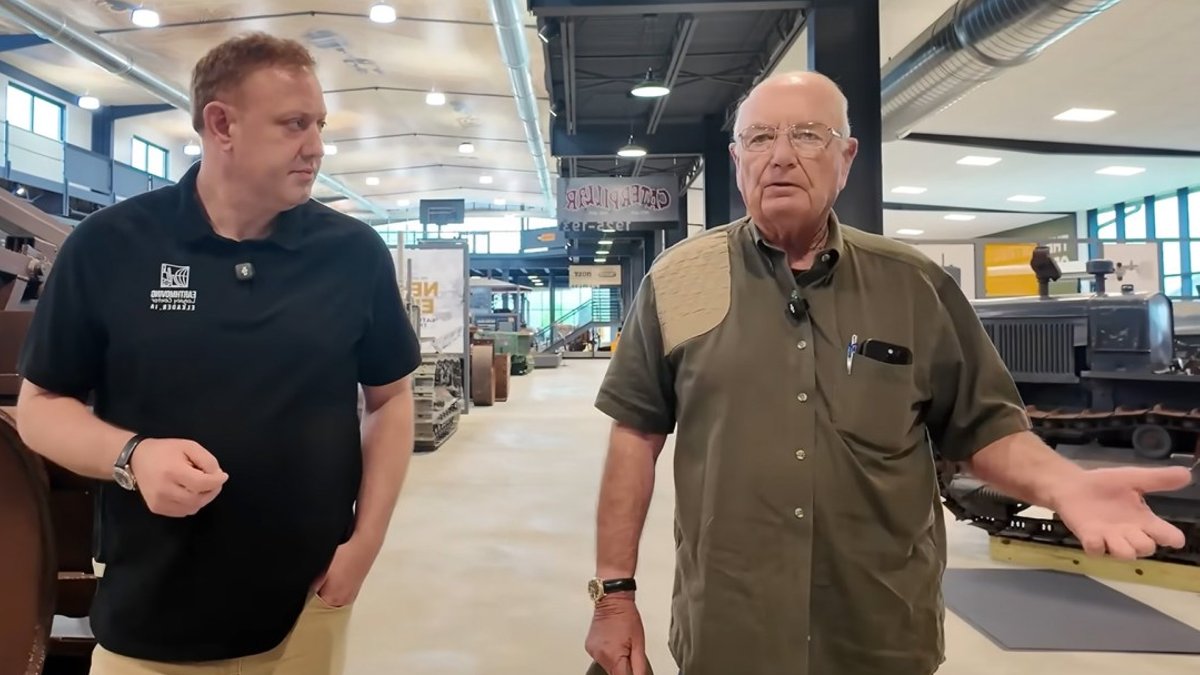
Former Caterpillar engineer Jim Coles argues that the inline‑six engine outperforms V‑type designs for demanding work, citing decades of experience with the company’s 3406 series and its long‑standing use across heavy‑duty applications.
Why the inline‑six became Caterpillar’s workhorse
Coles started at Caterpillar in 1966 and later ran a network of Peterbilt dealerships for four decades. In a recent interview recorded at the Earthmoving Legacy Center in Elkader, Iowa, he recalled how the company deliberately chose the straight‑six layout for its off‑highway engines. The design’s natural balance reduced vibration, and the simpler cooling system lowered maintenance demands.
When additional components such as turbochargers or emissions controls needed to be added, the inline configuration offered a more straightforward mounting surface. That flexibility helped the 3406 engine family, a 14.6‑liter unit produced from 1973 to 2007, stay in service for more than three decades. The engine, internally labeled VITEL (“vehicle industrial truck engine line”), powered earth‑moving equipment, stationary generators, marine vessels, and semi‑tractors.
Related: Physics Sim Gains Unexpected Steam Popularity
V‑type engines fell out of favor
Coles notes that Caterpillar, like many manufacturers, experimented with V‑type engines, mentioning models such as the 90‑degree RM180 and the larger 3408. “V’s versus sixes were always more of a compromised design,” he says.
He adds that today’s market no longer supports many V‑engines. Examples he cites—Cummins 903 and 555, Caterpillar 3208, and Detroit 8V71/8V92—have largely disappeared. “All the other V’s that were in the market…are gone. Nobody’s in the V business today, and rightfully so,” he asserts.
Modern inline‑sixes can reach 1,100 horsepower, a figure that rivals or exceeds many former V‑type powerplants. The combination of high output and the inherent durability of the straight‑six layout makes it a preferred choice for heavy‑duty trucks and construction equipment.
Related: Lowrider Meet Expands Automotive Horizons
The practical impact of this shift is felt by operators who rely on consistent performance under load. An engine that runs smoother and stays cooler can mean fewer breakdowns on the job site, translating into lower downtime and maintenance costs. For fleets that schedule regular service, the simpler design of an inline‑six reduces the time mechanics spend on complex repairs, keeping trucks on the road longer.
Industry response and future outlook
While some manufacturers continue to offer V‑configuration options for niche markets, the broader trend favors the straight‑six for its blend of power, reliability, and serviceability. The Earthmoving Legacy Center’s video, which runs about 25 minutes, highlights the 3406’s durability and the engineering decisions that kept it in production for over three decades.
Coles’ perspective aligns with a growing consensus among heavy‑equipment users: the straight‑six’s balance of performance and ease of integration makes it well suited for the rigorous demands of modern construction and transport. As emission standards tighten and manufacturers seek to simplify engine families, the inline‑six’s proven track record may continue to shape design choices for years to come.


