
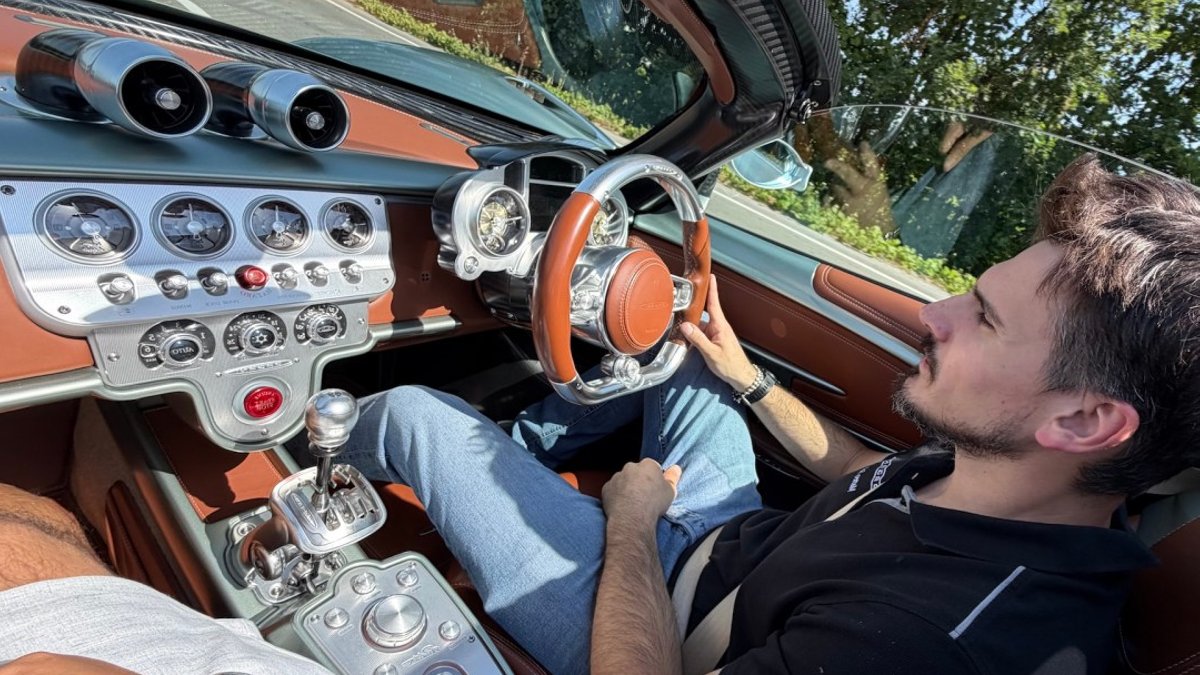
The Pagani Utopia Roadster, a hand‑built hypercar priced around $4 million, was the focus of a recent test ride that highlighted both its extreme performance and the expertise required to manage it.
First impressions from the passenger seat
Before taking the wheel, the author spent time as a passenger with Matteo, a development driver who has been with the Italian manufacturer for more than ten years. He tests a range of Pagani models, supports company events, and occasionally escorts journalists. While he never pursued a career as a professional racer, his experience with the brand’s vehicles is extensive.
During the ride, the Utopia Roadster’s 6.0‑liter twin‑turbo V12 engine produced 864 horsepower and 811 lb‑ft of torque. The car’s seven‑speed manual gearbox, described as a “dog‑leg” design, required careful coordination to handle the surge of power as the turbos spooled. According to the driver, the engine’s sound was exceptionally loud, and the acceleration felt “like a bat out of hell.”
Related: Toyota Adds Mellow Yellow to TRD Pro Lineup
At one point, the vehicle lifted off the ground while cresting a bridge, an anecdote that illustrates the sheer thrust the car can generate even on modest road climbs.
Driver skill and vehicle trends
The test driver demonstrated smooth shifting despite the high torque levels, a task that many would find challenging. The manual transmission’s layout demands precise timing; any misstep can cause a jolting surge that disrupts traction. His ability to keep the car stable while handling narrow Italian country roads highlighted the importance of driver input in extracting data from such a machine.
Although the Utopia Roadster is built for performance, the test environment was not a race track but a series of winding public roads. This setting required a blend of aggressive driving and caution, showing that the car can be evaluated without the extremes of a professional circuit.
For newcomers to the hypercar segment, the experience shows why a development driver’s role goes beyond mere speed. Managing a vehicle that delivers over 800 lb‑ft of torque demands both technical knowledge and feel for the car’s responses. The ability to “catch air” without losing control suggests that the chassis and suspension are tuned to cope with sudden weight transfers, a factor that can influence how future production models are refined.
Related: Ex-IndyCar driver’s BMW M3 sells at auction
Personal reaction and broader context
After the passenger ride, the author told Pagani’s public relations representative that the experience had “ruined [him] for life,” reflecting a strong emotional impact. The description points to the rarity of such an opportunity, as few drivers get to handle a car with the Utopia’s specifications on the roads where many of Italy’s elite automobiles are developed.
He also shared details about his personal driving habits, noting a regular Volkswagen Golf as his daily driver and a fondness for Fiat Pandas. He recounted past outings in various Pagani models through the Alps and on European racetracks, offering a glimpse into the diverse environments the brand tests its cars.
While the author’s upcoming hands‑on review is still pending, the passenger experience alone provides a clear picture of the vehicle’s character: a combination of raw power and detailed manual control, and a sound profile that commands attention.


